The construction industry is constantly evolving, driven by the need for stronger, more sustainable, and cost-effective building solutions. Traditional materials such as concrete, steel, and timber remain essential, but new innovations are transforming how structures are designed and built. These emerging construction materials offer improved performance, reduced environmental impact, and greater efficiency.
In this article, we’ll explore some of the most promising construction materials that are shaping the future of the industry.
1. Self-Healing Concrete
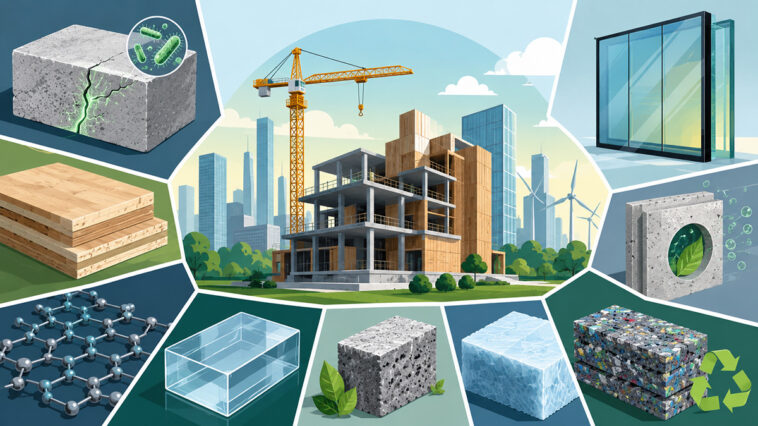
Concrete is one of the most widely used construction materials, but it is prone to cracking over time. Self-healing concrete addresses this issue by incorporating bacteria or specialized healing agents that activate when cracks appear.
Benefits:
- Extends the lifespan of structures
- Reduces maintenance and repair costs
- Improves durability in harsh environments
- Enhances structural safety
This innovative material is particularly useful for bridges, tunnels, and large infrastructure projects where maintenance can be costly and challenging.
2. Cross-Laminated Timber (CLT)
Cross-Laminated Timber is an engineered wood product made by layering timber boards in alternating directions and bonding them together. CLT offers remarkable strength while maintaining the environmental benefits of wood.
Benefits:
- Renewable and sustainable
- Lightweight yet strong
- Faster installation compared to concrete and steel
- Excellent thermal insulation properties
Many modern mid-rise and high-rise buildings are now incorporating CLT as a sustainable alternative to conventional construction materials.
3. Graphene-Enhanced Materials
Graphene is a carbon-based nanomaterial known for its extraordinary strength and conductivity. When added to concrete or other building materials, it significantly improves performance.
Benefits:
- Increased strength and durability
- Reduced material usage
- Improved water resistance
- Lower carbon footprint
As production costs decrease, graphene-enhanced construction materials are expected to become more widely adopted across the industry.
4. Transparent Aluminum
Despite its name, transparent aluminum is actually a ceramic material that combines transparency with exceptional strength.
Benefits:
- High impact resistance
- Excellent durability
- Superior weather resistance
- Enhanced security applications
This material has potential applications in high-security buildings, transportation infrastructure, and specialized architectural designs.
5. Geopolymer Concrete
Geopolymer concrete is an eco-friendly alternative to traditional Portland cement concrete. It utilizes industrial by-products such as fly ash and slag as binding agents.
Benefits:
- Significantly lower carbon emissions
- High resistance to chemicals and heat
- Reduced waste generation
- Improved durability
As sustainability regulations become stricter, geopolymer concrete is gaining attention as a greener construction solution.
6. Aerogel Insulation
Aerogel is one of the lightest solid materials ever developed. Often called “frozen smoke,” it offers exceptional insulation properties.
Benefits:
- Superior thermal insulation
- Lightweight construction
- Space-saving insulation solutions
- Improved energy efficiency
Aerogel is increasingly being used in energy-efficient buildings where maximizing thermal performance is a priority.
7. Recycled Plastic Building Materials
With growing concerns about plastic waste, manufacturers are developing construction products made from recycled plastics.
Benefits:
- Diverts waste from landfills
- Resistant to moisture and corrosion
- Lightweight and durable
- Supports circular economy initiatives
Applications include wall panels, roofing components, paving blocks, and modular building systems.
8. Carbon-Capturing Concrete
Carbon-capturing concrete incorporates technologies that absorb and store carbon dioxide during the curing process.
Benefits:
- Reduces greenhouse gas emissions
- Improves concrete strength
- Supports sustainable construction goals
- Helps meet environmental regulations
This innovation represents an important step toward achieving net-zero construction practices.
9. Smart Glass
Smart glass can change its transparency based on electrical signals, temperature, or sunlight exposure.
Benefits:
- Improved energy efficiency
- Enhanced occupant comfort
- Reduced cooling costs
- Modern architectural appeal
Commercial buildings and high-end residential projects are increasingly utilizing smart glass to improve building performance.
10. Hempcrete
Hempcrete is a bio-composite material made from hemp fibers, lime, and water. While not a structural material, it serves as an excellent insulation and wall infill solution.
Benefits:
- Carbon-negative material
- Excellent thermal and acoustic insulation
- Lightweight and breathable
- Sustainable and renewable
As green building practices gain momentum, hempcrete is becoming a popular choice among environmentally conscious developers.
Conclusion
The future of construction lies in materials that are stronger, smarter, and more sustainable. From self-healing concrete and graphene-enhanced composites to carbon-capturing concrete and hempcrete, these innovations are helping the industry address challenges related to durability, efficiency, and environmental impact.
Construction professionals who stay informed about emerging materials will be better positioned to deliver high-performance projects while meeting the growing demand for sustainable and resilient infrastructure. As technology advances and production costs decrease, many of these materials are expected to become mainstream solutions in the years ahead.