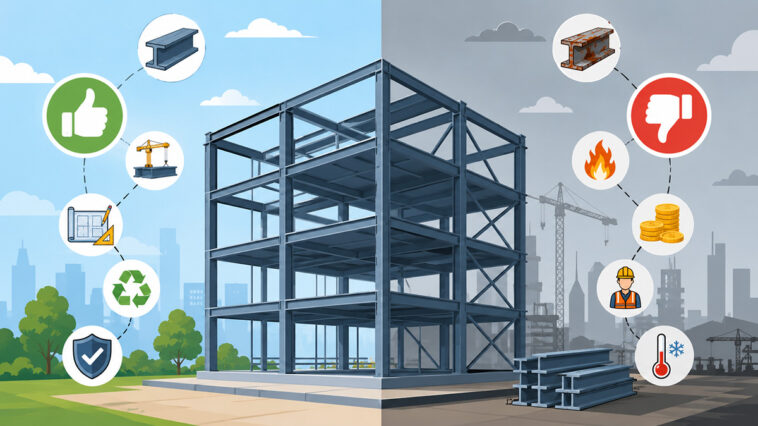
Steel structures have become a popular choice in modern construction due to their strength, versatility, and efficiency. From skyscrapers and industrial facilities to bridges and warehouses, steel plays a vital role in shaping today’s built environment. However, like any construction material, steel has both advantages and disadvantages that should be carefully considered during the planning and design stages.
What Are Steel Structures?
Steel structures are buildings or frameworks primarily constructed using steel components such as beams, columns, trusses, and plates. These elements are fabricated and assembled to create strong and durable structures capable of supporting heavy loads.
Advantages of Steel Structures
1. High Strength-to-Weight Ratio
One of the most significant benefits of steel is its exceptional strength relative to its weight. Steel can carry heavy loads while requiring less material compared to concrete or masonry. This allows for lighter foundations and more efficient structural designs.
2. Faster Construction
Steel components are typically prefabricated in factories and delivered to the construction site ready for assembly. This reduces on-site work, minimizes construction delays, and accelerates project completion.
3. Design Flexibility
Steel can be fabricated into a wide variety of shapes and sizes, enabling architects and engineers to create innovative and complex designs. Large open spaces, long spans, and unique architectural features are easier to achieve with steel.
4. Durability and Reliability
When properly maintained, steel structures can last for decades. Steel does not crack, shrink, or warp like some other construction materials, providing consistent structural performance over time.
5. Sustainability
Steel is one of the most recyclable construction materials available. Many steel products contain recycled content, and steel components can often be reused at the end of a building’s life cycle, reducing environmental impact.
6. Improved Quality Control
Because steel components are manufactured under controlled factory conditions, quality can be monitored more effectively than materials produced entirely on-site. This results in greater precision and consistency.
7. Adaptability and Expansion
Steel structures can be easily modified, expanded, or strengthened to accommodate future needs. Additional floors, extensions, and renovations can often be completed with minimal disruption.
Disadvantages of Steel Structures
1. Corrosion Risk
Steel is susceptible to rust and corrosion when exposed to moisture and harsh environmental conditions. Protective coatings, galvanization, and regular maintenance are necessary to prevent deterioration.
2. Fire Vulnerability
Although steel is non-combustible, its strength decreases significantly at high temperatures. Fireproofing measures such as coatings, insulation, or encasement are often required to maintain structural integrity during a fire.
3. Higher Initial Material Cost
Steel prices can fluctuate based on market conditions and global demand. In some cases, the initial material cost may be higher than alternative construction materials.
4. Skilled Labor Requirements
The fabrication and erection of steel structures require specialized skills, equipment, and experienced personnel. A shortage of qualified workers can affect project timelines and costs.
5. Thermal Conductivity
Steel conducts heat efficiently, which can lead to energy loss if proper insulation is not incorporated into the building design. Thermal bridging can reduce overall energy efficiency.
6. Maintenance Costs
To ensure long-term performance, steel structures require periodic inspections, repainting, and corrosion protection. These maintenance activities contribute to the overall lifecycle cost of the structure.
7. Buckling Under Certain Conditions
While steel is extremely strong, slender steel members can buckle under compression if not properly designed. Careful engineering analysis is essential to ensure structural stability.
Conclusion
Steel structures offer numerous advantages, including high strength, fast construction, design flexibility, and sustainability. These benefits make steel a preferred material for many commercial, industrial, and infrastructure projects. However, challenges such as corrosion, fire protection requirements, and maintenance costs must also be considered.
A successful steel construction project depends on proper design, quality fabrication, skilled installation, and ongoing maintenance. By understanding both the advantages and disadvantages of steel structures, project owners and construction professionals can make informed decisions that balance performance, cost, and long-term value.