
Every successful construction project begins with careful planning and accurate cost estimation. One of the most important documents used in this process is the Bill of Quantities (BOQ). Whether you’re a project owner, contractor, consultant, or quantity surveyor, understanding a BOQ can help you manage costs, compare contractor bids, and ensure project transparency.
In this article, we’ll explore what a BOQ is, why it matters, and how it contributes to the success of construction projects.
What Is a Bill of Quantities (BOQ)?
A Bill of Quantities (BOQ) is a detailed document that lists all materials, labor, equipment, and work items required to complete a construction project. It provides measured quantities for each item, allowing contractors to price the work accurately during the tendering process.
Typically prepared by a Quantity Surveyor, the BOQ serves as a common basis for contractors to submit competitive and comparable bids.
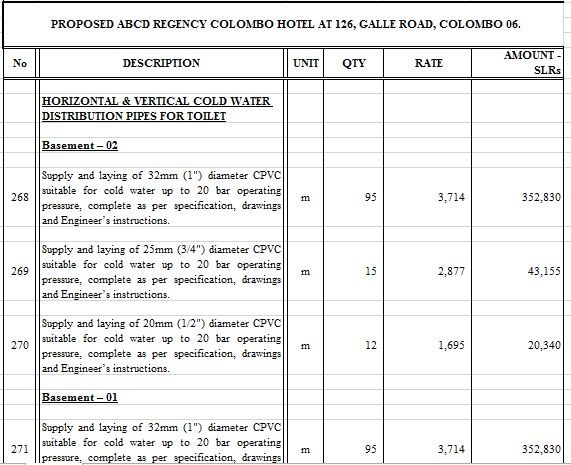
Key Components of a BOQ
A standard BOQ usually includes:
1. Item Description
A detailed explanation of the work to be carried out, such as excavation, concrete work, masonry, roofing, or finishing.
2. Unit of Measurement
Each work item is measured using a specific unit, such as:
- Cubic meters (m³) for concrete
- Square meters (m²) for plastering
- Linear meters (m) for piping
- Number (No.) for fixtures and fittings
3. Quantity
The calculated amount of work required based on project drawings and specifications.
4. Rate
The unit cost quoted by the contractor for each item.
5. Amount
The total cost of the item, calculated by multiplying the quantity by the rate.
Why Is a BOQ Important?
Accurate Cost Estimation
A BOQ provides a clear breakdown of project costs, helping owners and stakeholders understand where money will be spent.
Fair Tendering Process
Since all bidders price the same quantities, comparisons between contractor quotations become easier and more transparent.
Better Budget Control
Project managers can track actual costs against the BOQ throughout the construction process, helping prevent budget overruns.
Simplified Valuation and Payments
Progress payments can be assessed based on completed BOQ items, ensuring fair and accurate contractor payments.
Reduced Disputes
Clearly defined quantities and work descriptions help minimize misunderstandings and contractual disputes.
Types of Bills of Quantities
Firm BOQ
Prepared using complete project designs and accurate measurements. This is the most common type used for fixed-price contracts.
Approximate BOQ
Used when designs are not fully completed. Quantities are estimated and adjusted later as more information becomes available.
Operational BOQ
Focuses on construction activities and methods rather than purely measured quantities.
Who Uses a BOQ?
Several stakeholders rely on BOQs during a project:
- Project Owners
- Quantity Surveyors
- Contractors
- Consultants
- Project Managers
- Cost Engineers
- Financial Institutions funding the project
Each party uses the document to monitor costs, evaluate progress, and support decision-making.
Challenges in BOQ Preparation
While BOQs are extremely useful, preparing them requires precision and expertise. Common challenges include:
- Incomplete design information
- Measurement errors
- Changes in project scope
- Material price fluctuations
- Inaccurate specifications
Regular reviews and updates help maintain BOQ accuracy throughout the project lifecycle.
Modern BOQ Preparation
Today, many construction professionals use digital tools such as Building Information Modeling (BIM), quantity takeoff software, and project management platforms to generate more accurate BOQs. These technologies reduce manual errors and improve efficiency.
Conclusion
A Bill of Quantities is much more than a pricing document—it is a critical project management tool that supports accurate cost estimation, transparent tendering, budget control, and efficient project execution. By understanding and utilizing BOQs effectively, construction stakeholders can reduce financial risks and improve overall project success.
Whether you’re planning a small residential building or a large-scale commercial development, a well-prepared BOQ provides the foundation for informed decisions and successful project delivery.