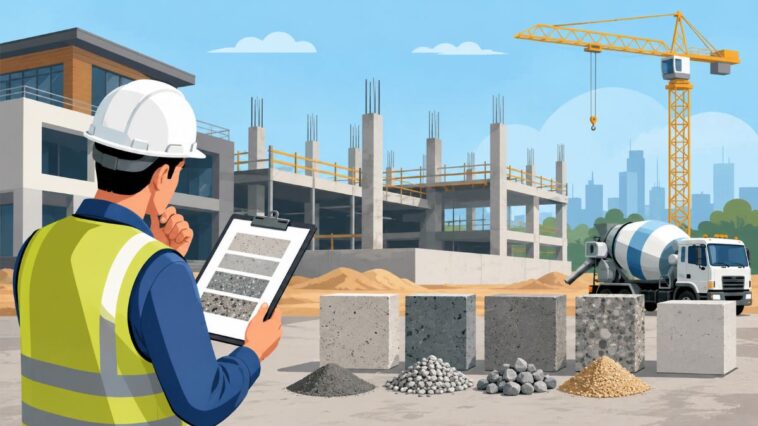
Concrete is one of the most widely used construction materials in the world. From residential homes and commercial buildings to roads and bridges, the strength and durability of a structure often depend on selecting the right type of concrete. However, not all concrete mixes are the same. Choosing the appropriate concrete for your project can significantly impact performance, longevity, and overall cost.
Why Choosing the Right Concrete Matters
Using the wrong concrete mix can lead to structural issues, premature cracking, increased maintenance costs, and even safety concerns. The right concrete ensures that your structure can withstand environmental conditions, support intended loads, and maintain its appearance for years to come.
Factors to Consider When Selecting Concrete
1. Project Type and Purpose
The first step is understanding the specific requirements of your project.
- Residential foundations: Require strong, durable concrete with good load-bearing capacity.
- Driveways and pavements: Need concrete that can withstand vehicle traffic and weather exposure.
- Commercial buildings: Often require higher-strength concrete for larger structural loads.
- Decorative projects: May benefit from stamped, colored, or polished concrete mixes.
Each application has unique performance requirements that influence the choice of concrete.
2. Required Strength
Concrete strength is typically measured in compressive strength, expressed in megapascals (MPa) or pounds per square inch (PSI).
Common strength grades include:
- 20–25 MPa: Suitable for pathways, patios, and light residential work.
- 30–35 MPa: Common for foundations, slabs, and residential construction.
- 40 MPa and above: Used for commercial buildings, bridges, and heavy-duty structures.
Consulting a structural engineer can help determine the appropriate strength level for your project.
3. Environmental Conditions
The environment where the concrete will be used plays a critical role in mix selection.
Consider factors such as:
- Extreme temperatures
- Heavy rainfall
- Coastal or marine environments
- Freeze-thaw cycles
- Exposure to chemicals or salts
Specialized concrete mixes with additives or supplementary materials can improve resistance to harsh conditions.
4. Workability Requirements
Workability refers to how easily concrete can be mixed, transported, placed, and finished.
Projects with complex forms, dense reinforcement, or difficult access may require more workable concrete. Self-compacting concrete, for example, can flow into tight spaces without extensive vibration.
5. Durability and Longevity
Durability is essential for minimizing maintenance and repair costs. High-quality aggregates, proper water-cement ratios, and suitable admixtures can significantly improve concrete’s resistance to wear, corrosion, and environmental damage.
For infrastructure and commercial projects, investing in durable concrete often results in substantial long-term savings.
6. Budget Considerations
While cost is always a factor, choosing the cheapest concrete option can be expensive in the long run if repairs become necessary.
Balance your budget by considering:
- Initial material costs
- Installation expenses
- Maintenance requirements
- Expected service life
A slightly higher upfront investment may deliver better value over the lifespan of the structure.
Common Types of Concrete
Standard Concrete
A versatile option suitable for many residential and light commercial applications.
Reinforced Concrete
Contains steel reinforcement to increase tensile strength and structural performance.
High-Strength Concrete
Designed for projects requiring exceptional load-bearing capacity.
Self-Compacting Concrete
Flows easily into forms and around reinforcement without mechanical vibration.
Decorative Concrete
Used for aesthetic applications, including stamped, stained, or polished finishes.
Fiber-Reinforced Concrete
Contains fibers that improve crack resistance and toughness.
Tips for Making the Right Choice
- Define your project’s structural requirements.
- Consider local climate and environmental exposure.
- Work with qualified engineers and contractors.
- Select quality materials from reputable suppliers.
- Prioritize long-term performance over short-term savings.
Conclusion
Choosing the right concrete is one of the most important decisions in any construction project. By evaluating factors such as strength, durability, environmental conditions, workability, and budget, you can ensure that your structure performs reliably for decades. Consulting experienced construction professionals and selecting the appropriate concrete mix from the start will help prevent costly problems and contribute to a successful project outcome.